

Cass deals major blow to draft Conversion Practices Bill
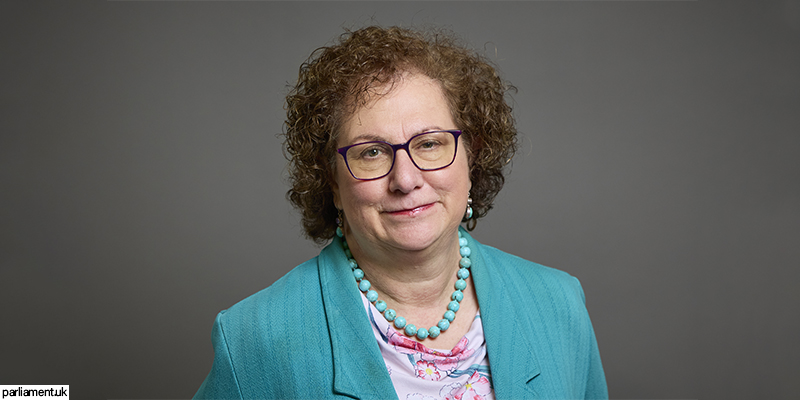
Last Monday, the Committee scrutinising the draft Conversion Practices Bill heard from Baroness Cass, in what proved to be one of the most significant interventions yet.
Baroness Cass authored the Review of NHS gender services for young people, which led to the ban on puberty blockers for under-18s over serious concerns about their safety and long-term risks.
Having previously warned that a conversion practices law could have a chilling effect on clinicians taking an ‘exploratory approach’ to gender, her appearance on the Government’s press release welcoming the Bill suggested she had been persuaded of its safeguards.
But it seems the Government has been wrong to trumpet Cass’ support for its Bill.
In a major blow to the Government, Baroness Cass told the Committee that the Bill is not “anywhere near tight enough to avoid serious unintended consequences”.
Asked whether she supported the Bill progressing, she said: “I can’t support the Bill in its current form.”
She went on to explain that, when she gave a statement welcoming the Bill back in June, she had been given just 15 minutes to read it. Her quote was therefore based on what she had been told by the Bill’s drafter, Olivia Bailey. What makes this revelation all the more extraordinary is that Bailey herself was in the room to hear it, as a member of the Committee.
Here are just some of the concerns Baroness Cass raised:
- She warned that there are malign actors who could use the Bill to encourage young people unhappy at not being placed on a medication pathway to pursue criminal action against clinicians. She said that many people are already being branded ‘conversion therapists’ – herself included. Dr Anna Hutchinson raised the same concern in her evidence to the Committee.
- She said it would be “very hard for parents to avoid potentially falling foul of the provisions of the Bill”, since a parent refusing to use opposite-sex pronouns, or restricting access to money they believe might be used to buy hormones, could meet the definition of abuse.
- The previous week, Olivia Bailey MP seemed not to understand that the process is the punishment. Baroness Cass, however, made the point clearly: even if a clinician is ultimately cleared following a vexatious complaint of ‘conversion practices’, they still have to endure the full ordeal of an investigation. The stakes couldn’t be higher: “There are people who commit suicide whilst awaiting the outcome of a GMC referral.”
- She echoed Dr Hutchinson’s warning that clinicians could be driven out of working in this area. Why would they take the risk, she remarked, when they could simply work elsewhere?
- She warned that the Bill could be weaponised in an acrimonious parental breakup. She recounted the case of a mother who had been in an abusive relationship and whose daughter was struggling with anorexia. After the father left the family home, the daughter began identifying as trans. The mother tried to be supportive but refused to use male pronouns. The father then reported her to social services for failing to support her daughter’s gender transition.
- The draft Bill exempts healthcare unless it “falls far below the standards reasonably expected”. But what happens when those standards are themselves disputed? Baroness Cass stressed that “standards are highly contested in this area”, pointing out that “there are many who disagree strongly with the approach recommended in [her] Review”.
- She warned that some regard the exploratory approach to gender advocated in her Review as a ‘conversion practice’ – and could seek to use a conversion practices Bill to overturn it. Her co-panellist, Professor Gillian Leng, President of the Royal Society of Medicine, similarly warned that the broad definition could capture exploratory conversations about sexuality and gender – leaving clinicians reluctant to have them at all.
- Asked whether she is concerned that the very act of passing legislation will create a chilling effect, Baroness Cass replied without hesitation: ‘yes’.
Cass deals major blow to draft Conversion Practices Bill
2026-11-24 09:50:43‘No evidence of conversion practices’, health professionals tell Committee
2026-11-13 14:02:5693.55% reject NI conversion practices Bill in public consultation
2026-11-10 16:54:06