

Draft Conversion Practices Bill: even family lawyers can’t make sense of it
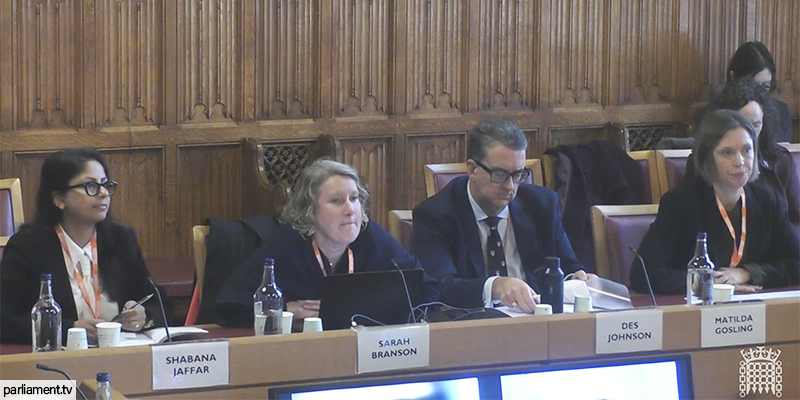
Last Thursday, the Committee examining the draft Conversion Practices Bill took evidence from the Children and Family Court Advisory and Support Service (Cafcass), the Family Law Bar Association, social policy researcher Matilda Gosling and FFLAG (a charity that dropped its original name, Families and Friends of Lesbians and Gays, to reflect its inclusion of all LGBTQ+ people).
Here are ten key moments from the session:
- Lord Hope began by asking the panel whether the definitions in the Bill are sufficiently clear, particularly when applied to family settings. The Family Law Bar Association’s answer was unequivocal: “They are not.” Sarah Branson explained that the language is not language she recognises as a family lawyer, later adding that “abuse is doing quite a lot of heavy lifting, but it isn’t clearly defined”. Cafcass also raised concerns that the Bill’s definitions are “wide” and “subject to interpretation”. This begs the question: how are family courts supposed to enforce the legislation when even family lawyers can’t make sense of its wording?
- Cafcass warned that the Bill could encourage people to use the family courts to settle disputes that should be resolved within the family.
- Naz Shah MP questioned Cafcass about whether a child could be removed from their parent following an accusation of ‘conversion practices’. Carcass confirmed that this is a very real possibility.
- Matilda warned that the ‘protection orders’ in the Bill could intimidate parents into self-censoring – making certain conversations about identity within the home off-limits. Equally alarming, children could use the threat of a protection order to pressure parents into complying with their identity. Cafcass agreed that the ‘protection orders’ could inhibit parental discussions, particularly in cases where parents have separated.
- Matilda warned of the serious long-term physical and mental effects of treating ‘gender identity’ as innate, arguing that such an approach overlooks the relevance of social context and trauma in understanding why someone might identify as trans. In the context of the Bill, she said: “It potentially makes an abusive conversion practice of helping children and young people feel comfort in their body”.
- Danny Beales MP attempted to discredit Matilda's argument by questioning the relevance of statistics showing much higher rates of desistance prior to the advent of ‘social transition’. Matilda argued that treating a conversation between a mother and her 13-year-old daughter who identifies as a boy as a conversion practice, and making it illegal for that mother to help her child feel comfortable in her body, would effectively embed a social transition pathway in law.
- Matilda demonstrated how easily a parent could meet all three elements of the proposed conversion practices offence. For example, if abuse includes ‘psychological’, ‘emotional’ and ‘economic’ pressure, even restricting screen time or removing pocket money could fall foul of it. She also argued that the threshold of “serious alarm or distress… which has a substantial adverse effect on their usual day-to-day activities” is relatively low, given that teenagers commonly experience distress that affects their everyday functioning.
- FFLAG called for an even more expansive ban, including a lower threshold for criminality that would capture conduct “likely to cause” serious alarm or distress. It also branded warnings about the risk of vexatious complaints as “scaremongering”, claiming to be unaware of any increase in complaints in jurisdictions that have introduced conversion practices bans.
- Matilda urged the Committee to consider the implications of the Bill for siblings. If children as young as 10 – the age of criminal responsibility in England and Wales – can be criminalised, will police be expected to investigate spats between siblings?
- Finally, Matilda highlighted how parents of trans-identifying children in jurisdictions with conversion practices laws are being forced to parent with their hands tied behind their backs.
Latest articles
Draft Conversion Practices Bill: even family lawyers can’t make sense of it
2026-11-25 09:03:50Cass deals major blow to draft Conversion Practices Bill
2026-11-24 09:50:43‘No evidence of conversion practices’, health professionals tell Committee
2026-11-13 14:02:56