

Ten standout moments from day 1 of evidence on the draft Conversion Practices Bill
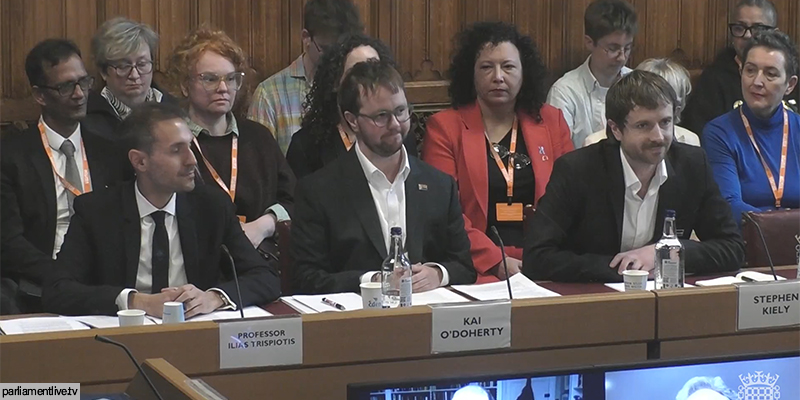
The Joint Committee of MPs and Peers examining the draft Conversion Practices Bill began hearing evidence last Thursday.
First to give evidence were the campaign groups that have been driving this legislation: Stonewall, the Ban Conversion Practices Coalition and Galop (which runs the Government’s conversion practices helpline). Representing the other side were Sex Matters, Gay Men’s Network and LGB Alliance.
Here are ten standout moments:
1. Galop’s Kai O’Doherty claimed that its report, Still Not Illegal, contained hundreds of case studies of ‘conversion practices’ reported to Galop’s services, identifying parents as the most likely perpetrators of abuse. Former Equalities Minister Olivia Bailey made the same claim in the Commons when introducing the draft Bill. But these figures don't withstand scrutiny. For a start, 85% of cases came via third-party referrals, with just 29 coming through Galop’s general helpline or website. Crucially, Galop itself admits that the findings “should not be considered to be prevalence data” and that many of the 195 cases “align with existing offences”.
2. When asked for examples of ‘conversion practices’, Kai cited Jane, a young lesbian woman, who was apparently forced by her parents “to bathe in holy water”, dragged along the floor by members of her church, and subjected to other physical abuse in an attempt to change her sexuality. In eight years of campaigning on this issue, this is the first time we have heard of anyone being forced to bathe in holy water; nor is it a practice we recognise. That said, there is no question that such treatment is abusive and already illegal. To suggest a new law is needed to bring Jane’s abusers to justice is deeply misleading. Existing law already allows them to be prosecuted.
3. Kai described the draft Bill as “a great start” but wants it to go further. Stonewall and the Ban Conversion Practices Coalition likewise called for an even more expansive ban, arguing that the carve-out for healthcare professionals is too broad. As we have pointed out previously, the current wording of the carve-out would do little to prevent a chilling effect on conscientious practitioners who believe that trans-identification calls for exploration, not affirmation. Worse, by relying on the phrase “standards reasonably expected”, it offers no meaningful protection where a regulator itself mandates an affirmatory approach.
4. The Ban Conversion Practices Coalition has been extremely vocal in its demands for prayer to be criminalised. Yet when the Coalition’s Ilias Trispiotis was asked by Baroness Brown of Silvertown whether a pastor who prays with someone struggling with their identity could be guilty of a ‘conversion practice’, he fudged his response, saying that it was ‘too difficult to say’.
5. Labour MP Naz Shah spelt out the chilling reality of the proposals: a parent who refuses to affirm their child’s identity could be guilty of a criminal offence.
6. Former criminal barrister and director of Gay Men’s Network, Dennis Kavanagh, similarly explained how a parent saying to their child they should love their body could meet every element of the proposed criminal offence. He warned that all it could take was one difficult, distressing argument for a parent to find themselves at risk of prosecution.
7. Sex Matters’ Helen Joyce demolished the claim that a conversion practices law would catch only a tiny number of abusers by exposing the sheer range of ordinary people who could be dragged into the criminal crosshairs: “people with parental responsibility, teachers who have to uphold safeguarding, employers who must enforce same-sex rules for single-sex spaces”.
8. Dennis warned that the impact on health professionals would go far beyond a chilling effect – it would “be a deep freeze”. Health professionals are already warning that if the draft ban becomes law, they would have no choice but to stop working with children and adults struggling with their identity. The risk of prosecution would be too great.
9. Helen gave the example of an 11-year-old autistic girl who identifies as non-binary. Her mother tells her she is a girl and that, regardless of what she believes about herself, she is going to enter female puberty. The girl finds this deeply distressing and refuses to go to school. Under the draft Bill, that mother could face up to five years in prison. Helen also pointed out that the words ‘adult’, ‘child’, ‘parent’ and ‘family’ don’t appear anywhere in the draft Bill. Taking a child’s phone away to protect them from harmful influences may be responsible parenting. The same action by a husband towards his wife, however, could be coercive control. Yet the draft makes no distinction whatsoever between adults and children – meaning ordinary parenting could meet the threshold for abuse.
10. Finally, Dennis warned the Committee that the Bill could drive a sledgehammer through Articles 7, 8, 9, 10 and 14 of the European Convention on Human Rights. Parents could be left unable to know whether they are breaking the law (Article 7), while at the same time being told by the state “how to parent” (Article 8). Freedom of religion and expression could also be chilled, leaving people afraid to speak about their beliefs (Articles 9 and 10). And under the draft Bill, even telling a teenager who identifies as non-binary that you do not believe in it could carry legal risks (Article 14).
Ten standout moments from day 1 of evidence on the draft Conversion Practices Bill
2026-11-06 09:40:38Phillipson’s platitudes won't protect parents from prosecution
2026-10-30 18:01:32Scrutiny underway on NI conversion practices Bill
2026-10-29 07:57:46