

Priest reported to police for ‘conversion therapy’ for upholding Catholic teaching on marriage
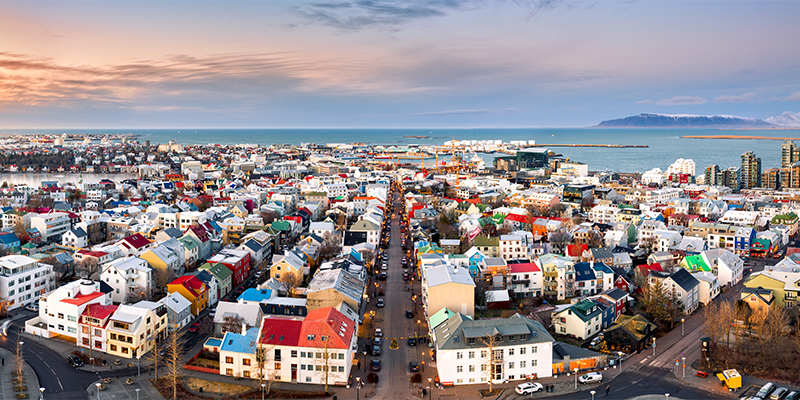
A priest in Iceland has been reported to police for ‘conversion therapy’ for stating the Catholic Church’s teaching on sexual ethics.
Jakob Rolland was being interviewed by state broadcaster RÚV for a series on the Catholic Church when he was asked whether people who do not live according to the teachings of the Catholic Church can receive Holy Communion. The journalist shared her own example of being a lesbian and living with her girlfriend.
Rolland told Catholic magazine The Pillar: “I replied that first she would have to reconsider her way of life”. When asked by the journalist if he meant that she should change, which she did not want to do, he said: “Well, that’s your choice, but then, in this condition, you cannot become a Catholic, and you cannot receive Holy Communion.”
Rolland was taken aback when the interview subsequently aired under the headline, Catholic Church in Iceland encourages conversion therapy for homosexuality. After the broadcast he was apparently reported to the police for promoting conversion therapy. News outlets say police are investigating the priest, although he states they have yet to contact him.
Rolland is clear that the Catholic Church does not engage in conversion therapy, but instead offers prayer and pastoral support for those struggling with their sexuality. Yet, he says, LGBTQ+ activists believe that even advocating Catholic teaching on chastity falls within the scope of a ban. He also says that, “Conversion is a key word in the daily life of Catholic people. We are in a position, constantly, of turning from evil to good”, and that the call to control one’s sexual desires applies to all Catholics.
Iceland’s ban
Iceland’s conversion therapy law came into force in January 2024. It criminalises “tactics such as coercion, deception, or threats to force someone to undergo treatment intended to suppress or alter a person’s sexual orientation, gender identity, or gender expression”.
During its passage through Parliament, the Parliament’s Justice Committee sought to have the plans shelved, saying they were ill-defined and should not progress. Critics of the Bill, including gay and lesbian group Samtokin ’22, warned that innocent people would be wrongly criminalised under the legislation. But despite these objections, the Bill was forced through by pro-ban advocates. You can read our blog on it here.
In the wake of Rolland’s interview, Iceland’s Justice Minister has called for a review of the scope of the law. Helga Vala Helgadóttir, a former Member of Parliament who sponsored the Bill during its passage, has also called for all religious organisations to be examined to see whether they are engaged in conversion therapy.
UK must not go down this ideology-driven path
The Westminster Government has pledged to bring forward a draft ‘conversion therapy’ Bill for England and Wales, and the Scottish Government has asked that the legislation also apply north of the border.
Back in 2021, The Christian Institute asked one of the UK’s top human rights lawyers, Jason Coppel KC, to consider whether various ordinary church scenarios could fall foul of a UK conversion therapy ban. One of the scenarios he considered is particularly relevant.
“[A] church protects people from taking communion in an ‘unworthy manner’ (1 Cor. 11:27-28) by only serving it to believers who are not involved in ‘known sin not repented of’. An openly gay visitor from a liberal church learns he cannot take communion. He says the refusal is an attempt to change his sexual behaviour and reports the church.”
In every case, Mr Coppel said ‘yes’ – such ordinary church scenarios could be criminalised under a ban.
Cases like that of Jakob Rolland show how easily conversion therapy laws can be exploited by activists to target those who hold to traditional teachings on sexual ethics. It’s why last October, over 1,200 church leaders from across Great Britain signed a letter to the Equalities Minister warning that the proposed law could criminalise the ordinary work and witness of churches. We must continue to implore politicians not to go down this dangerous ideology-driven path.
SNP passes motion demanding extreme conversion therapy ban
2026-10-20 06:54:21Scot Govt questioned over regular meetings with LGBTQ+ groups on ‘conversion therapy’
2026-10-05 11:18:27Scotland’s still passing the buck on ‘conversion therapy’
2026-09-08 11:49:33