

Govt's draft Conversion Practices Bill: a Trojan Horse for criminalising speech
The Westminster Government has published its draft Bill to ban so-called conversion practices for England and Wales, eight years after Prime Minister Theresa May first bounced her Government into promising a ban.
On the surface, such a ban sounds like something we could all get behind. After all, who could object to a law to protect people from ‘abusive practices’?
But are we really to believe that, in 2026, abuse is still lawful in the UK? Of course it’s not. Assault, coercive control, sexual offences, harassment, false imprisonment and child abuse are already criminal offences.
Back in 2018, few people had even heard of ‘conversion practices’. Groups like Stonewall exploited this fact to smuggle the issue onto the political agenda, arguing that a new law was needed to protect LGBTQIA+ people from abuse.
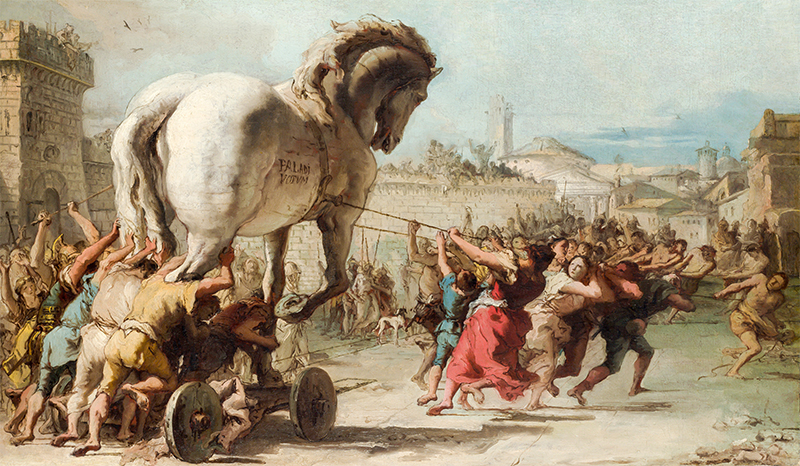
Since then, the doors of this Trojan horse have been thrown wide open
While activists continue to invoke extreme examples like ‘electroshock treatment’ and ‘corrective rape’— practices that are already plainly illegal — they now openly argue for a law that could see parents and pastors locked up for challenging LGBT orthodoxy in private conversations, prayer and pastoral ministry.
Troublingly, the Government’s new draft Bill is doing its very best to deliver what the activists have long demanded.
New criminal offence
The draft Bill creates a three-part framework for the new criminal offence.
1. The first sets out the definition itself, which is astonishingly broad. Section 1(2) defines a ‘conversion practice’ as any conduct carried out towards an individual with the intention of causing them (i) to have or not to have, or (ii) to believe that they have or do not have, a (particular) sexual orientation or transgender identity.
If that definition made your head spin, it’s because it is as confusing as it is far-reaching. It is drawn so widely that merely expressing gender-critical beliefs or biblical views on marriage and sexual ethics comes within its Kraken-like reach. To add to the uncertainty, ‘transgender identity’ is left undefined but does include ‘non-binary’ identities and an apparently unlimited range of others.
2. The second part deals with the question of when a conversion practice becomes ‘abusive’. Rather than providing a clear threshold, section 1(4–6) gives courts a non-exhaustive list of considerations for answering this question — including highly subjective concepts such as “emotional” and “economic” pressure. It’s not difficult to see how a mother who refuses to fund her teenage daughter’s request to take testosterone could be accused of exerting “economic pressure”. Likewise, a pastor who counsels a man in his congregation not to leave his wife for another man could be said to have applied “emotional pressure”.
3. Section 2 establishes the third element of the offence. An abusive conversion practice becomes a criminal offence if it causes “serious harm to the individual’s physical or mental health” or “serious alarm or distress… which has a substantial adverse effect on their usual day-to-day”.
This may sound robust, but the test of ‘serious alarm or distress’ is easily met.
The concepts of alarm and distress have already proved problematic for free speech under sections 4A and 5 of the Public Order Act. Simply adding the word serious does little to solve the issue.
Given the highly emotive nature of the issues involved, feelings of alarm or distress are likely to be amplified. Take the earlier example of a mother refusing to support her daughter’s request to transition. It is not difficult to imagine how that refusal could be experienced as causing “serious distress or alarm”.
Or consider the man whose employer refuses him access to his female co-workers' toilets. Suddenly we’re potentially ticking all the “emotional”, “economic” and “distress” boxes at once.
Once conduct falls within the Bill's sweeping definition of a conversion practice in section 1, it could all too easily satisfy this test. The penalty is striking: up to five years in prison and/or an unlimited fine.
The silver lining in all of this is that this is a ‘draft Bill’, meaning it must undergo pre-legislative scrutiny. Over the coming months, a joint committee of MPs and Peers will scrutinise the wording and produce a report, which the Government will then use to decide whether to introduce a Bill to Parliament. We must use this opportunity to expose just how pernicious this legislation is and make clear that a law that turns loving parents and pastors into criminals has no place in British society.
Will Westminster’s draft conversion therapy Bill apply to Scotland?
2026-08-03 15:32:47What does a new PM mean for a conversion therapy ban?
2026-07-23 15:59:24Govt's draft Conversion Practices Bill: a Trojan Horse for criminalising speech
2026-07-10 13:54:51